


Vibe Chat - Pillow Talk
4.229.00 Reviews
App Specs
- Version
- 1.0.1
- Updated On
- License
- Free
- Downloads
- 50,000+
- Developer
- ASDA TREASURER
- Categories
- Entertainment
- Platform
- Android
Screenshots
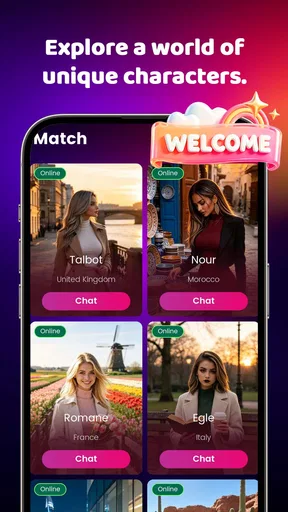
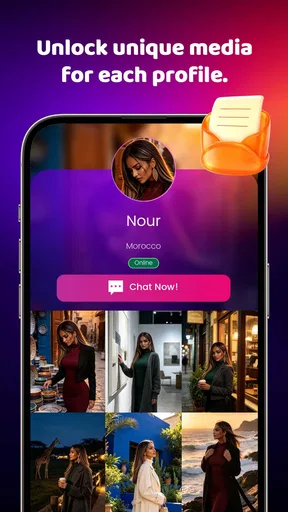

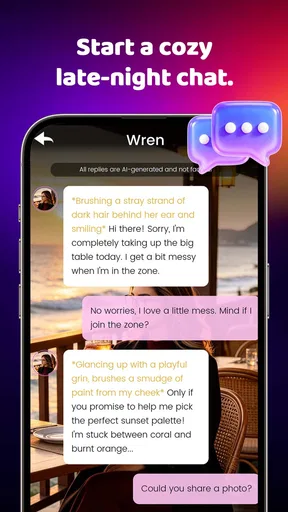

 Analysis by AppCompare
I approached Vibe Chat - Pillow Talk as an entertainment app for moments when I wanted a more personal kind of digital company rather than another feed to scroll. Its central idea is simple: help me find a curated digital partner that fits my mood. That makes it feel less like a conventional messaging utility and more like a guided mood-based experience, which is also why it will appeal to some people much more than others.
The app is free, belongs to the entertainment category, and is published by ASDA TREASURER. Its audience is mature, with a 17+ content rating, so I would not treat it as a casual app for younger users or assume that every conversation will suit every household. The current release is version 1.0.1, and it supports devices running Android 8.0 or later. Those details matter because the experience is likely to depend as much on the phone and the user’s expectations as on the idea itself.
How the mood-based experience feels in everyday use
What I like most about Vibe Chat - Pillow Talk is that it starts from an emotional situation instead of a practical task. I do not open it to organize a calendar, answer work messages, or find a restaurant. I open it when I want a conversational experience shaped around how I feel. That distinction gives it a clearer identity than many general-purpose chat apps, but it also means it is not trying to replace a real messaging service.
In a normal evening scenario, I can imagine using it after a long day when I want a low-pressure interaction. The useful part is the mood-first framing: instead of having to invent a topic immediately, I can approach the experience with a particular atmosphere in mind. That makes the first step easier than opening a blank chat window. For someone who enjoys character-driven digital entertainment, this can be a more inviting starting point than a generic assistant.
At the same time, I would keep my expectations realistic. A curated digital partner is still a digital experience, not a substitute for a trusted friend, counselor, or relationship. The app’s appeal comes from mood, privacy of the moment, and playful interaction. It is strongest when I treat it as entertainment that can accompany downtime, not as a source of professional advice or dependable human support.
The 17+ rating is especially relevant here. I would check the app’s tone for myself before letting another person use my phone, and I would avoid presenting it to teenagers simply because it is free or easy to install. Mature entertainment can be enjoyable when used deliberately, but the age guidance should shape who uses it and where it is opened.
Where it fits better than ordinary chat apps
Compared with a standard messenger, this app has a narrower but more focused purpose. Ordinary messengers are better when I need to contact a real person, share a file, coordinate plans, or maintain an ongoing conversation with someone I know. They bring social obligations with them: replies, timing, misunderstandings, and the need to keep a relationship moving.
Worth Reading Before You Choose

Flipboard Shows What News Apps Must Do Beyond the Feed

Switching to Android Auto Means Rethinking Your Driving Routine

Google Calendar Makes a Crowded Week Easier to Manage

Ludo King Makes the Most of the Minutes Between Plans

Baby Panda World Brings Quick Play to Modern Phones, but Its Game Library Feels Busy

ESPN’s Live Game View Makes Following Close Games Easier
A mood-oriented digital partner removes much of that pressure. I can approach it for a short session without asking whether I am interrupting somebody or leaving a friend waiting. That is the most convincing reason to try it. It gives casual entertainment a conversational shape, while a social network would surround the same moment with notifications, public content, and unrelated distractions.
It is also different from a broad AI assistant. A general assistant is usually more useful for factual questions, planning, writing, or structured tasks. This app is better understood as a themed companion experience. If my goal is to finish an email or compare products, I would choose a utility app. If my goal is to relax with a mood-led conversation, the focused design makes more sense.
What affects the sense of speed
Because the experience is conversation-led, perceived speed matters more than raw visual complexity. I notice delays most when I am waiting for the interaction to continue, not when I am looking at a static screen. A smooth session should make each exchange feel immediate enough to preserve the mood. When an entertainment app asks me to wait between simple actions, the emotional flow can disappear quickly.
I would approach performance expectations with some caution. The release is still early, and the app is at version 1.0.1, so I would not judge it by the same maturity standard as a long-established communication platform. On a compatible phone with a stable connection, I would expect the best experience to come from keeping the session focused and avoiding unnecessary background activity. That is practical advice rather than a measured benchmark, but it reflects how conversational entertainment usually feels when the device is already busy.
One useful habit is to begin with a short session instead of leaving the app open indefinitely. If the conversation is the reason I launched it, there is little benefit in keeping it running while I switch between several demanding apps. Closing it after use also makes it easier to tell whether any later slowdown came from the app itself or from the phone’s overall workload.
Busy moments and resource trade-offs
The heaviest moment for me would not necessarily be the opening screen. It would be a longer interaction in which I repeatedly send messages, move between screens, or return to the app after checking something else. That is when memory pressure, network quality, and other active applications can influence how continuous the experience feels.
On an older device that meets the minimum operating-system requirement, I would be more careful about multitasking. Android 8.0 compatibility tells me the app is accessible to a wide range of phones, but it does not guarantee identical performance across every model. A newer phone with more breathing room may handle switching more comfortably, while an older handset may reload the app or interrupt the session more readily when several applications are active.
My practical workflow would be simple: close video-heavy or game-heavy apps first, open the chat when I have a reasonably stable connection, and avoid judging the whole experience from one crowded multitasking session. This is a small but meaningful trade-off. The app’s concept encourages relaxed use, yet relaxed use can turn into a long session, and longer sessions expose device limitations more clearly.
I would also avoid assuming that free means cost-free in every practical sense. The download price is free, but my time, data connection, battery, and attention still count as resources. If I were using it away from home, I would keep an eye on battery and mobile-data behavior rather than leaving any entertainment app active in the background without a reason.
Stability and recovering from interruptions
Reliability is not only about whether an app opens. For a chat-centered experience, it is also about what happens when the connection changes, a notification takes me elsewhere, or the operating system reclaims memory. A short interruption is much less frustrating if I can return to the same point without having to reconstruct the mood from scratch.
My recommendation is to treat interruptions as part of the setup. If I am beginning a more involved conversation, I would use the app when I am unlikely to receive a stream of calls or switch repeatedly between demanding applications. That does not make the app more reliable by itself, but it reduces the situations most likely to break the rhythm.
If a session stops responding, I would first leave and reopen the app rather than repeatedly tapping the same control. On a phone with limited free memory, I would close other recent apps before trying again. If the problem appears only when the connection is unstable, I would retry after moving to a stronger network. These are ordinary recovery steps, but they matter more here because the value of the app is tied to conversational continuity.
I also think the early version deserves a little patience. Version 1.0.1 suggests a relatively young product, so I would expect the experience to develop over time rather than assume every edge case has already been refined. That is not a reason to avoid it, but it is a reason to keep the app updated through the normal store process and to judge it as a focused entertainment product rather than a finished social infrastructure.
Device fit and who should skip it
The minimum operating-system requirement is Android 8.0, which makes the app approachable for many Android users. Still, operating-system compatibility is only the first filter. I would also consider how much storage, memory, battery life, and network stability my phone has available. A device that struggles with basic multitasking may make a conversational app feel less dependable even if it can install it successfully.
I would recommend it most to adults who enjoy characterful digital entertainment, prefer private low-pressure interaction, and want something more directed than an empty chat screen. It can also suit someone who wants a short wind-down ritual after work or a mood-based activity that does not require coordinating with another person.
I would skip it if I need factual accuracy, professional guidance, dependable human contact, or a full-featured messenger. I would also skip it if mature-rated material is not appropriate for my situation. Someone looking for a productivity assistant should use a tool designed around tasks, while someone seeking genuine emotional support should speak with a qualified person or a trusted contact instead.
Another trade-off is novelty versus depth. The curated-partner concept can make the first sessions feel more distinctive than a generic chat tool, but users who want a large community, many communication formats, or a broad social network may find the focused scope limiting. The app’s strength is not variety in every direction; it is the specific mood-led interaction it offers.
What the audience response suggests
The app has an average rating of 4.4 from around 372 ratings, with 26 written reviews and over 50 thousand installs. I read those figures as a sign of meaningful early interest rather than proof that it will suit everyone. A rating can tell me that many users enjoyed their experience, but it cannot remove the personal questions around mature content, device performance, or whether a digital partner is the kind of entertainment I actually want.
The scale also helps set expectations. This is not an enormous mainstream messenger with years of accumulated habits and infrastructure. It feels more appropriate to approach it as a newer, specialized entertainment app that has already attracted an audience but is still establishing its identity. That makes the focused concept appealing, while also making it sensible to watch how consistently it behaves on my particular phone.
My performance verdict
My overall view is cautiously positive. The app has a clear reason to exist: it turns a mood into the starting point for a digital conversation, rather than asking me to manage another social feed or use a general assistant for something it was not designed to do. That focus makes it easy to understand and potentially pleasant in short, relaxed sessions.
Its performance case is strongest when I use it deliberately on a compatible device, with a stable connection and minimal multitasking. I would not choose it for demanding communication, urgent information, or situations where interruption recovery is critical. I would also remember that a young version and a mature audience mean the app deserves a thoughtful trial rather than automatic trust.
For me, the deciding question is not whether it can replace ordinary chat. It cannot, and it does not need to. The better question is whether I want a free entertainment app built around a curated digital partner and a particular mood. If the answer is yes, this is worth trying. If I need a practical tool, a real social connection, or a guaranteed source of support, another category will serve me better.
My recommendation: adults who enjoy conversational digital entertainment should give it a brief, focused test on their own phone and pay attention to how smoothly it resumes after interruptions. That small trial will reveal more than the store summary: whether the tone fits, whether the device keeps up, and whether the app’s mood-led approach adds something genuinely enjoyable to their downtime.
Pros
- Simple interface makes starting conversations quick and easy.
- Private room options help create a more comfortable chat environment.
- Works well for relaxed
- late-night conversations with a partner.
- Conversation prompts can help avoid awkward silences.
- Lightweight design is unlikely to overwhelm your device.
Cons
- The user base may be smaller than on mainstream chat platforms.
- Some features may require an account or additional permissions.
- Chat quality depends heavily on finding an active
- compatible user.
- Limited customization may not suit users wanting a highly personal space.
- Privacy details should be reviewed carefully before sharing sensitive information.
FAQs for Vibe Chat - Pillow Talk
What is Vibe Chat - Pillow Talk, and who is it designed for?
Vibe Chat - Pillow Talk is a conversation-focused app intended to help people communicate in a more personal, relaxed, and emotionally engaging way. It may be useful for couples, close friends, or anyone looking for thoughtful prompts and private discussions rather than fast, public social-media interactions. Before downloading, check the app’s current description to confirm which features and relationship-oriented tools are included.
Does Vibe Chat - Pillow Talk require an account or personal information?
The registration requirements can vary by platform version, so users should review the sign-up screen and privacy policy before creating a profile. The app may request information such as an email address, name, age, or relationship preferences to personalize the experience. Avoid sharing sensitive details in conversations unless you understand how messages are stored, processed, and potentially synchronized across devices.
Is Vibe Chat - Pillow Talk free to download and use?
Vibe Chat - Pillow Talk may be available as a free download, but some conversation packs, personalization options, premium tools, or other features could require an in-app purchase or subscription. Check the store listing for the latest pricing, trial conditions, renewal terms, and cancellation instructions. If a free trial is offered, remember that it may automatically convert into a paid subscription.
Are conversations in Vibe Chat - Pillow Talk private and secure?
Privacy should be considered carefully when using any app designed for intimate conversations. Review the developer’s privacy policy to learn whether messages, profile data, analytics, or device information are collected and how long they are retained. Also check whether conversations are protected with encryption, whether content can be deleted, and whether another person using your device could access the app.
Can Vibe Chat - Pillow Talk be used by everyone, and does it work on both Android and iOS?
Availability, age requirements, and supported features may differ between Android and iOS versions. Users should confirm that their device meets the app’s operating-system requirements and read the store’s age rating before installing it. Because the app may encourage romantic or emotionally personal discussions, younger users and families should pay particular attention to the stated audience, safety guidance, and content policies.


